
Introduction: The Rise of Mobile Salvage & Upcycling Workshops
The upcycling movement has evolved rapidly over the last decade, inspiring countless creators to transform discarded materials into striking, functional pieces. Traditionally, these projects have been housed in stationary workshops, garages, or backyard sheds. But what if your creative salvage operation could go wherever the best materials are found? Enter the mobile salvage and upcycling workshop—a flexible, efficient, and sustainable solution for makers who want to work on-site at demolition projects, flea markets, estate cleanouts, or remote salvage locations.
Establishing a mobile workshop isn’t just a novelty; it’s a strategic move that enables you to source, restore, and reimagine materials directly at the point of discovery. This approach cuts down on transport costs, reduces your carbon footprint, and accelerates project timelines. However, setting up a mobile workshop involves more than tossing some tools into a van. It requires careful planning, smart storage solutions, and a clear understanding of the unique challenges and opportunities that come with working on the move.
In this comprehensive guide, we’ll walk you through every critical step of building your own mobile salvage and upcycling workshop. From vehicle selection and tool organization to power supply strategies and safety considerations, you’ll gain practical tips and actionable insights to hit the road with confidence—and creativity.
Choosing the Right Vehicle for Your Mobile Workshop
Van, Trailer, or Truck: Pros and Cons
Your vehicle is the backbone of your mobile operation. The right choice depends on your typical projects, the scale of your tools, and where you plan to travel.
- Cargo Van: Offers a secure, enclosed space ideal for tool storage and small-scale projects. Vans like the Ford Transit, Mercedes Sprinter, or Ram ProMaster are popular for their high roofs and ample cargo space.
- Box Truck: Provides more room for larger salvaged pieces and can comfortably house workbenches or stationary equipment. However, it’s less maneuverable in tight urban spaces.
- Utility Trailer: Flexible for those who use their vehicle for multiple purposes, but requires a towing vehicle and may lack climate control or security.
Consider payload capacity, interior height, ease of access (side/rear doors), and parking logistics. A high-roof van strikes a balance for most upcyclers, offering enough standing room and security without being unwieldy.
Essential Modifications for Workshop Use
- Insulation and Ventilation: Insulate walls and ceiling to regulate temperature. Install roof vents or small fans to manage dust and fumes.
- Electrical Wiring: Plan for safe, code-compliant wiring to support lighting, outlets, and charging stations.
- Flooring: Use durable, non-slip materials like rubber mats or heavy-duty vinyl for safety and easy cleanup.
- Lighting: Install bright, energy-efficient LED strips or panels for clear visibility during detailed work.
Designing Efficient Tool and Material Storage
Space-Saving Storage Solutions
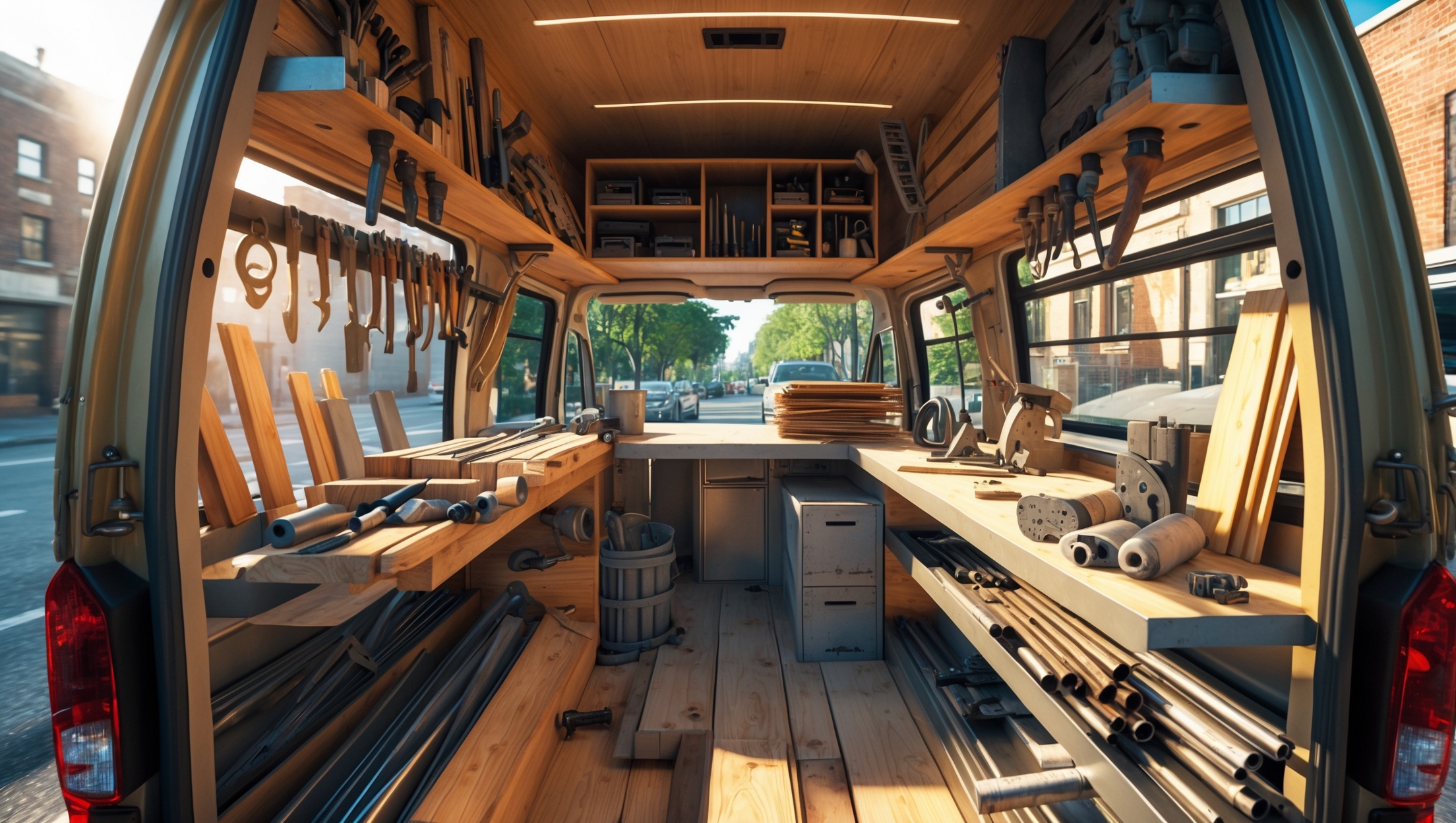
In a mobile workshop, every inch counts. Use vertical space with custom shelving, pegboards, and magnetic tool strips. Stackable bins or drawers keep fasteners, adhesives, and small hardware organized. For power tools, consider heavy-duty cases that can be securely strapped in place.
- Custom Racks: Build racks for frequently used tools like saws, drills, and sanders. Quick-release mounts make for rapid deployment on-site.
- Fold-Down Workbenches: Attach a foldable worktable to the wall; stow it upright when not in use to maximize floor space.
- Sliding Drawers: Deep drawers beneath benches or shelves can stow larger items and keep the workspace tidy during transit.
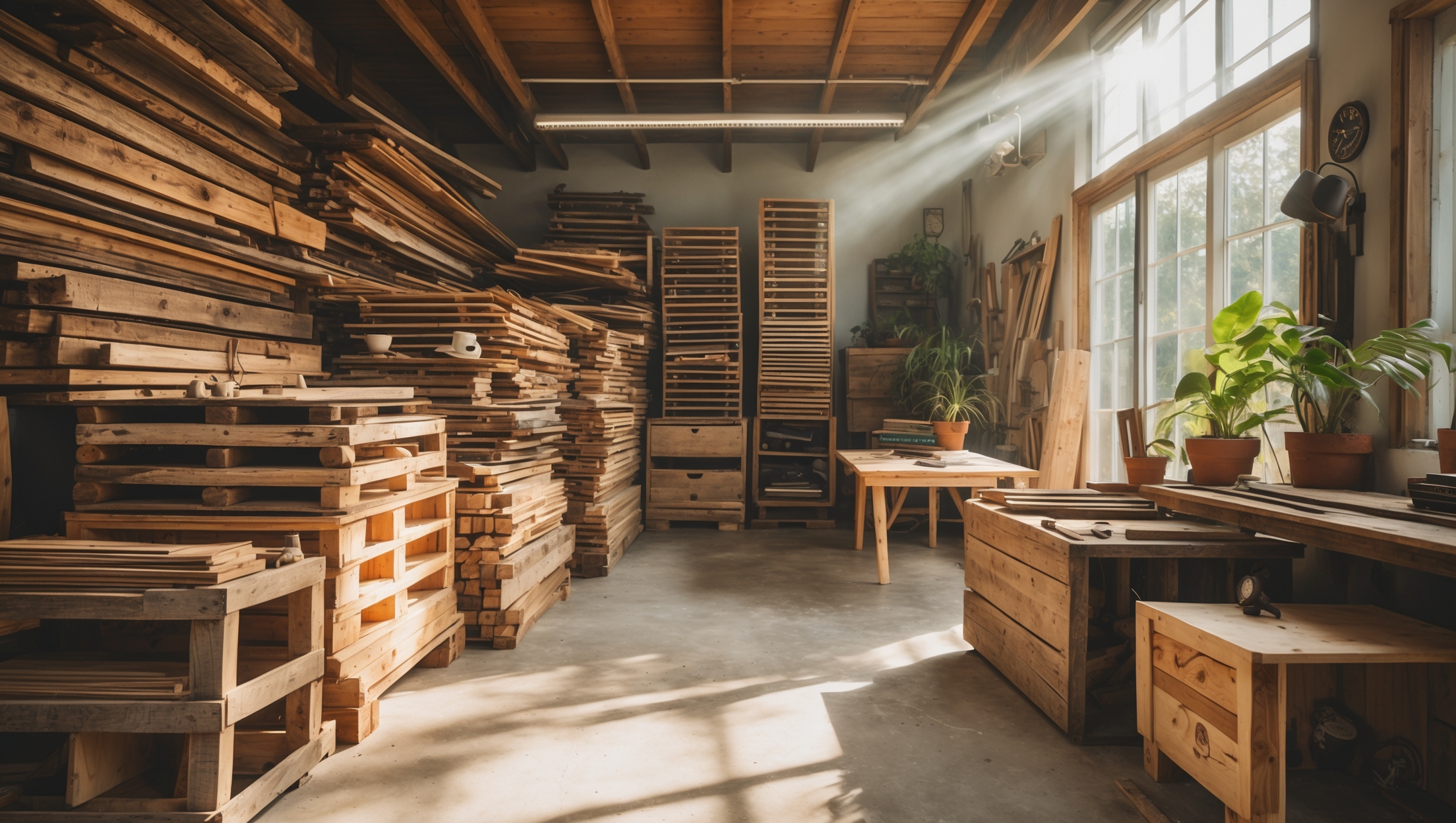
- Material Compartments: Designate space for salvaged wood, metal, or glass, using bungee cords or adjustable dividers to prevent shifting while driving.
Securing Tools and Salvaged Finds On the Go
Movement during travel can damage tools and materials. Use tie-down points, ratchet straps, and foam padding to secure everything. Install lockable storage for high-value tools and keep a detailed inventory for insurance and organization.
Essential Tools and Equipment for Mobile Upcycling
Core Power and Hand Tools
Your toolkit should cover all basic salvage and upcycling needs, while remaining compact and easy to transport. Prioritize multi-purpose tools and battery-powered options for off-grid work.
- Cordless Drill/Driver: With multiple batteries and a wide bit selection.
- Jigsaw and Circular Saw: Compact, cordless models for wood and metal cutting.
- Oscillating Multi-Tool: For cutting, sanding, scraping, and detail work.
- Angle Grinder: Essential for metalwork and surface prep.
- Hand Tools: Hammers, pry bars, screwdrivers, tape measures, pliers, hand saws, utility knives.
- Clamps: Multiple sizes for holding materials during repair or assembly.
- Portable Sander: For prepping salvaged surfaces.
Specialty Restoration Equipment
- Heat Gun: For paint removal and softening adhesives.
- Portable Vice: Clamp-on or bench-mounted for secure work holding.
- Dust Extraction: Compact shop vac or cyclone separator for on-site cleanup.
- Battery-Powered Lighting: Rechargeable work lights for low-light sites.
Power Supply and Sustainability on the Road
Off-Grid Power Options
Reliable power is crucial for mobile upcycling. Consider the following solutions:
- Portable Power Stations: Lithium battery packs (e.g., Goal Zero, Jackery) supply AC and DC power for tools and lights. Choose models with sufficient wattage for your main equipment.
- Solar Panels: Roof-mounted or portable panels can recharge batteries during downtime. Aim for at least 200W of capacity for regular use.
- Inverter Generators: Quiet, fuel-efficient generators (Honda, Yamaha) provide backup power for high-draw tools, but require safe fuel storage and ventilation.
Eco-Friendly Practices
- LED Lighting: Reduces energy draw, extends battery life.
- Rechargeable Batteries: Minimize disposable battery waste by investing in high-quality rechargeable packs for all cordless tools.
- Solar Charging: Use solar to recharge power stations and tool batteries whenever possible.
On-Site Salvage and Upcycling Techniques
Evaluating and Processing Materials at the Source
Being on location allows you to assess the condition of salvaged items before transport. This reduces waste and ensures you only bring back usable pieces. Develop a quick assessment checklist:
- Check for Structural Integrity: Avoid items with severe rot, rust-through, or infestation.
- Test for Lead Paint or Asbestos: Use portable test kits for safety before disturbing old finishes.
- Disassemble on Site: Remove hardware, separate materials, and cut oversized items down for easier storage.
- Immediate Cleaning: Use brushes, scrapers, and rags to remove debris, dust, or loose paint before loading.
Mobile Restoration Best Practices
- Staging Area: Set up a folding table or portable stand outside the van for cleaning, sanding, or small repairs.
- Containment: Use drop cloths or tarps to contain dust and chips, especially when working in public or shared spaces.
- Efficient Tool Use: Organize tools by task (demolition, cleaning, repair) for quick access during fast-paced salvage jobs.
- Waste Management: Bring bins for scrap, recycling, and hazardous waste to leave sites cleaner than you found them.
Safety Considerations for Mobile Workshops
On-the-Go Safety Essentials
- First Aid Kit: Stock with bandages, antiseptics, eye wash, and burn cream.
- Fire Extinguisher: Rated for electrical and flammable liquid fires.
- Personal Protective Equipment (PPE): Gloves, safety glasses, N95 masks, hearing protection, and steel-toed boots.
- Secure Tool Storage: Prevent loose tools from becoming projectiles in sudden stops.
- Ventilation: Open doors, windows, or roof vents when using adhesives, paints, or solvents.
Parking and Site Safety
- Choose Level Ground: Prevent accidental rolling and ensure stable work surfaces.
- Reflective Markings: Use cones or reflective tape when parked in busy areas.
- Local Regulations: Research parking restrictions and site access rules before arrival.
Logistics and Workflow Optimization
Planning Your Salvage Route
Maximize efficiency by grouping jobs or pickups in the same area. Use mapping tools to plan routes, avoid low-clearance roads, and identify safe parking near salvage sites. Keep a flexible schedule for unexpected finds.
Staying Organized on the Move
- Digital Inventory: Use a tablet or smartphone app to track tools, supplies, and salvaged materials by location and condition.
- Project Bins: Designate bins for in-progress projects to avoid mixing parts and hardware.
- Daily Cleanup: Reserve 15 minutes at the end of each workday to tidy up, restock consumables, and inspect for damage or missing items.
Budgeting for a Mobile Upcycling Workshop
Startup Costs Breakdown
- Vehicle Purchase or Lease: $8,000–$35,000, depending on age, size, and features.
- Workshop Fit-Out: Shelving, insulation, electrical, lighting: $1,000–$3,000.
- Tools and Equipment: $1,500–$5,000 for a well-rounded kit.
- Power Systems: Portable stations, solar panels, generator: $1,000–$4,000.
- Safety Gear and PPE: $200–$500.
- Ongoing Maintenance: Budget for vehicle servicing and tool replacement.
Look for used vehicles and secondhand tools to stretch your budget without sacrificing quality. Prioritize purchases based on your most frequent project needs.
Legal and Insurance Considerations
Consult local authorities about business licensing, parking permissions, and mobile workshop regulations in your area. Insure your vehicle, tools, and inventory against theft, damage, and liability. Keep documentation and receipts for all equipment for insurance claims and tax purposes.
Conclusion: Empowering Creative Salvage On the Move
Setting up a mobile salvage and upcycling workshop is more than a logistical challenge—it’s an opportunity to redefine your creative process for maximum sustainability and impact. By taking your workshop on the road, you position yourself closer to the richest sources of reusable materials, reduce waste, and expand your ability to serve clients and communities wherever opportunity arises.
With careful planning, smart storage, and a well-curated toolkit, a mobile workshop becomes a powerful platform for sustainable living and creative expression. Whether you’re restoring architectural gems straight from demolition sites or turning curbside finds into functional art, your mobile operation enables you to adapt, innovate, and thrive in an ever-changing landscape of resources and needs.
As you embark on this journey, remember that every detail—from van layout to on-site workflow—contributes to your success. Invest in quality tools, prioritize safety, and stay organized to ensure your mobile workshop is as efficient and inspiring as any fixed location. Embrace the freedom to work wherever creativity calls, and let your sustainable salvage journey roll forward with confidence and ingenuity.

When deciding between a van and a box truck for a mobile workshop, how do you figure out what size you actually need if you’re mostly doing smaller projects but occasionally want room for bigger finds? Are there any major drawbacks to starting small and upgrading later?
To choose between a van and a box truck, consider the largest items or projects you expect to handle, even if they’re occasional. Sketch out your workspace needs and potential storage. Starting small with a van is common, but drawbacks include limited space for unexpected larger finds. Upgrading later can mean extra costs and effort moving tools and materials, but it lets you scale as your needs grow. Flexibility and budget are key factors to weigh.
As a parent who’d be using a mobile workshop mostly on weekends, I’m wondering how you handle keeping kids safe around all the tools and materials, especially in a more confined space like a van or trailer?
Safety in a mobile workshop, especially with kids around, is all about setting clear rules and boundaries. Store sharp or dangerous tools in locked cabinets when not in use, and consider using childproof latches. Designate a kid-friendly zone away from the work area, and always supervise children closely. Laying down ground rules about what they can and can’t touch really helps maintain a safe and fun environment.
Can you provide more details on how to safely organize heavy tools and sharp materials inside a cargo van to prevent shifting or injuries while driving between salvage locations?
To safely organize heavy tools and sharp materials in your cargo van, use secure toolboxes or lockable bins anchored to the floor or wall. Install shelving with raised edges and bungee straps to keep items in place. Store the heaviest items low and closest to the van’s walls to reduce shifting. For sharp materials, use blade covers and keep them in designated, labeled containers. Always double-check that all storage units are properly latched before driving.
I’m planning to work mostly at flea markets and demolition sites, and I’m deciding between a cargo van and a box truck. Can you give more specifics on how each option affects things like maneuverability in tight spaces, parking, and initial setup costs?
A cargo van is generally easier to maneuver and park in tight flea market spaces or busy demolition sites due to its smaller size. It’s also less expensive to purchase and set up initially. A box truck, while offering more workspace and storage, can be harder to park and navigate in crowded areas, and it usually comes with higher upfront costs for both the vehicle and interior build-out.
I’m curious about how you handle power supply when working at remote salvage locations. Do you usually rely on portable generators or battery-powered tools, and how do you make sure you have enough power for a full day of upcycling projects?
For remote salvage locations, we generally use a mix of battery-powered tools and portable generators. Most of our essential equipment is cordless with backup batteries kept charged in advance. For larger or high-draw tools, we bring a compact, fuel-efficient generator. Planning ahead is key—we calculate approximate power needs for the day and bring extra batteries or fuel as a buffer to ensure uninterrupted work.
I’m weighing whether to go with a box truck or a cargo van for my upcycling projects. Besides the obvious difference in space, are there specific maintenance challenges or insurance costs I should consider when making this choice for a mobile workshop?
Beyond space, box trucks usually have higher maintenance costs due to their larger engines, more complex transmissions, and heavier-duty parts. They might also require commercial driver licenses depending on size. Insurance for box trucks often costs more because of their size and the greater potential for damage in an accident. Cargo vans are generally cheaper to insure and maintain but offer less customization and storage. Consider your project scale, driving comfort, and budget for upkeep and insurance when choosing.
When it comes to setting up a mobile workshop, you mention power supply strategies. What are some practical ways for beginners to handle power needs on the road, especially if I don’t have access to outlets at remote salvage locations?
For remote locations without power outlets, consider using portable power stations (battery packs) or a small generator to run tools and lights. Solar panels are also becoming more affordable and can recharge your power stations during the day. Start by estimating your tool wattage needs, then choose a power solution that matches your requirements and is easy to transport. Always bring extra extension cords and check your equipment regularly.
I’m interested in how you’d handle power supply strategies for tools when working in remote locations. Do you recommend using a generator, solar panels, or some other setup to keep everything running smoothly on-site?
For remote locations, a combination of portable generators and solar panels often works best. Generators provide reliable power for high-demand tools, while solar panels can keep batteries and smaller devices charged quietly and sustainably. Consider your tool requirements: battery-operated tools are flexible, so bringing extra charged batteries is also helpful. Match your setup to your typical power needs and location constraints for the most efficient workflow.